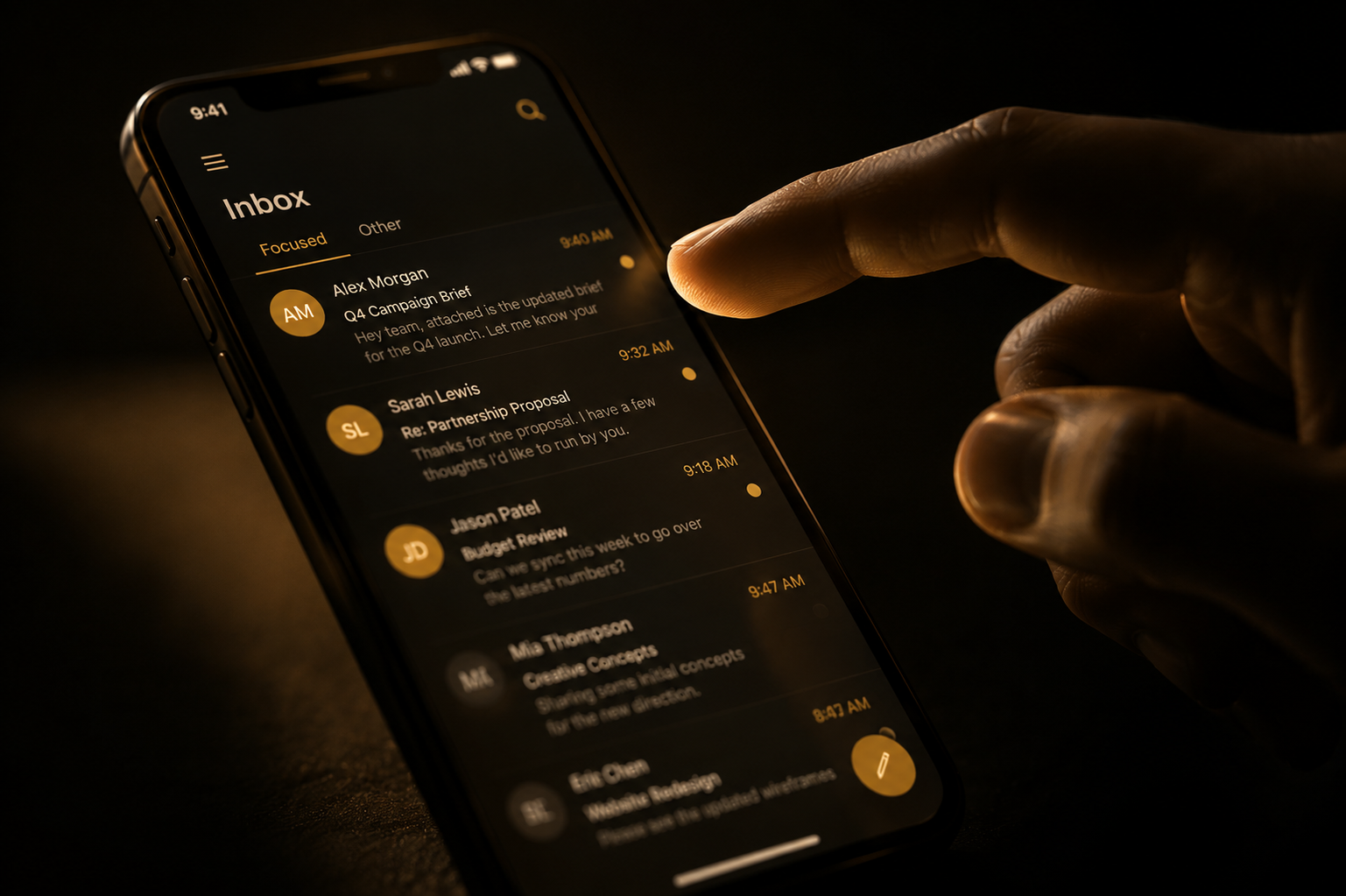
We use targeted, data-driven tools to find your audience based on demographics, interests, and buying behavior — then build personalized content tailored to reach them.
Whether it's a weekly newsletter or a campaign to reach new audiences, our email marketing keeps your business top of mind without the guesswork of doing it alone.
Common questions.
What is email marketing?
+
Sending targeted email to prospects and customers to build relationships, stay visible, and drive sales. In practice it is the one marketing channel where you own the audience. Social platforms rent you access to your own followers and change the terms whenever it suits them, but a list you have built is yours, and it reaches people directly. That is why email consistently outperforms most channels on cost per result for small and mid-sized businesses, and why it tends to be the last thing a business should cut.
What platform do you send from?
+
We run email programs on our own proprietary marketing automation platform. Sequences, contact records, activity history, and reporting all live in one place, which means follow-up actually happens on schedule rather than depending on someone remembering. It also means we are not passing along a third-party software subscription for you to maintain, or rebuilding your automations every time a vendor changes their pricing. You get reporting on what is being sent and how it is performing.
Do you write the emails, or do we?
+
We write them, and you approve before anything sends. That is the normal arrangement and the one most clients want, since writing consistent email is exactly the task that gets postponed when the week gets busy. You review the messaging and the sequence up front, and you can change any of it at any point. If someone on your team writes well and wants to stay involved, that works too, and we handle the sequencing, sending, and reporting around their copy.
What kinds of emails do you send?
+
Newsletters, promotions, welcome sequences, re-engagement campaigns, and follow-up triggered by what a contact actually did, matched to your customer journey rather than to a calendar. The mix matters. A welcome sequence to a new subscriber and a re-engagement email to someone who has ignored you for eight months should not read the same way, and a promotion sent to your whole list treats a loyal customer exactly like a stranger. Segmenting properly is most of the difference between email that works and email that gets muted.
How often should we email our list?
+
More often than most businesses are comfortable with, and less often than a hard-sell agency will push. For most businesses a predictable rhythm of something genuinely useful every week or two beats both silence and daily volume. What actually drives unsubscribes is rarely frequency by itself, it is sending email that gives the reader nothing. We start with a cadence you can sustain, watch how your specific list responds to it, and adjust from there rather than guessing once and never revisiting.
What if we do not have an email list yet?
+
Then building one is the first project, and it is worth doing properly. That means creating a real reason to subscribe on your website, capturing addresses from the customers and prospects you already talk to, and getting consent recorded correctly. It does not mean buying a list. Purchased lists produce spam complaints, damage your sending reputation, and can create legal exposure depending on your jurisdiction and industry. A small list of people who chose to hear from you outperforms a large list of strangers, every time.
How do you keep our email out of spam folders?
+
With the technical setup and the sending discipline that deliverability actually depends on. On the technical side that means properly authenticating your sending domain so mailbox providers can verify the email is really from you. On the discipline side it means keeping the list clean, removing addresses that consistently bounce or never open, honoring unsubscribes immediately, and not sending to people who never asked. No one can promise perfect inbox placement, since providers make their own decisions, but the majority of deliverability problems come from skipping these basics.
What results should we expect?
+
You should expect to see performance data from the first campaign, and honest interpretation of it. The metrics that matter are opens, clicks, replies, unsubscribes, and where possible the revenue or booked conversations that follow. Absolute benchmarks vary enormously by industry and list quality, so a number that looks strong in one sector is weak in another. What matters more is the trend on your own list over time, and whether the emails are producing conversations. If the numbers are flat after a few campaigns, we change the approach rather than sending more of the same.